For our next Food and Agricultural History meeting, we dive into the world of urban food production: from the early modern period up until now. How have these practices changed? And what can we learn from these (often) women practising urban farming?
Antonia Weiss, Wageningen University – Deep Foodscape: Migrant Biographies and Food Cultivation in the Afterlives of a Postwar Garden City Neighborhood
This paper contributes to the multidisciplinary scholarship on urban gardening in Europe by examining the Amsterdam neighborhood of Nieuw-West, a postwar garden city neighborhood where approximately 70% of residents have a migration background and where a historical green infrastructure is incrementally being transformed into an edible landscape against a backdrop of urban renewal efforts. Drawing on an innovative combination of historical and qualitative research methods, the paper examines how residents’ gardening biographies intersect with the longer history of Nieuw-West’s food environment. By developing the concept of deep foodscape, the paper demonstrates how urban gardening in Nieuw-West is wrought through the interplay of migration histories, historically produced urban forms, and biological-ecological temporalities, thereby offering a new lens for centering marginalized food-growing practices in European cities.
Sanne Steen, Erasmus University – Religion and spirituality in the early modern kitchen garden
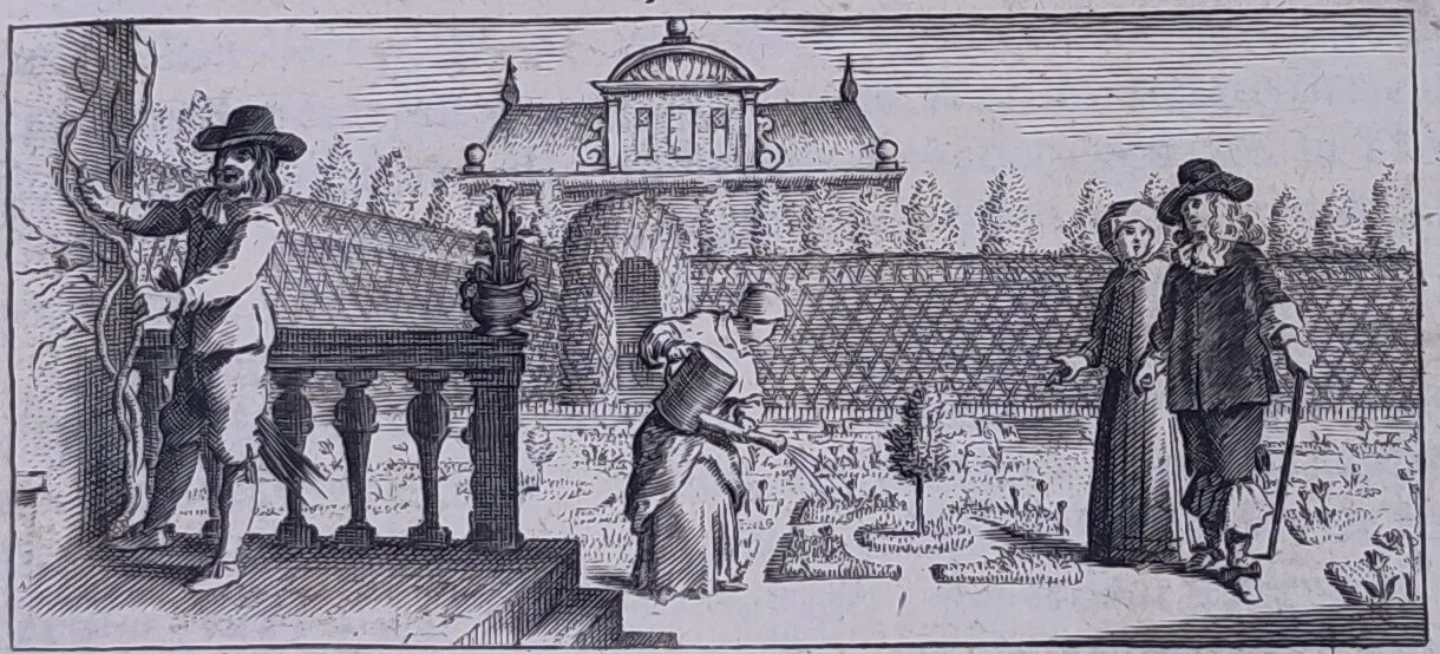
The early modern kitchen garden provided gardeners with much more than vegetables, medicine, cosmetics or art. Gardening was considered a relaxing pastime, a scientific inquiry or a religious experience, to name a few purposes. I will present my research of early modern Dutch kitchen garden handbooks to elaborate on gardening as a religious experience. In my presentation, I combine book history, art history and literature, to distinguish two types of a religious practice of vegetable gardening evident in Dutch seventeenth-century gardening manuals.